
Start here
- Keyword research tools, comparedFree and paid, what the numbers mean, and which one fits
- Keyword research serviceWe turn the data into a ranked list of pages to build or fix
- Reading keyword intentWhat a search wants before you write a page for it
- Keyword clusteringGroup the phrases that belong on one page
- Zero search volume keywordsWhy a tool's zero often hides real buyers
- Keyword research for online storesMatching every shopper's search to one page in the catalog
- SEO Chrome extensionsKeyword numbers on the Google results page itself
Articles


GatorCrawl · software we built
GatorCrawl Keywords: the research in this post, in minutes
Seed keywords, a competitor's whole keyword list, a keyword gap or 1,000 pasted keywords, with volumes, difficulty, trends and quick wins. The Chrome extension puts the same numbers on Google's results page. Full disclosure: DataCram built it, so weigh our enthusiasm accordingly.
GatorCrawl Keywords
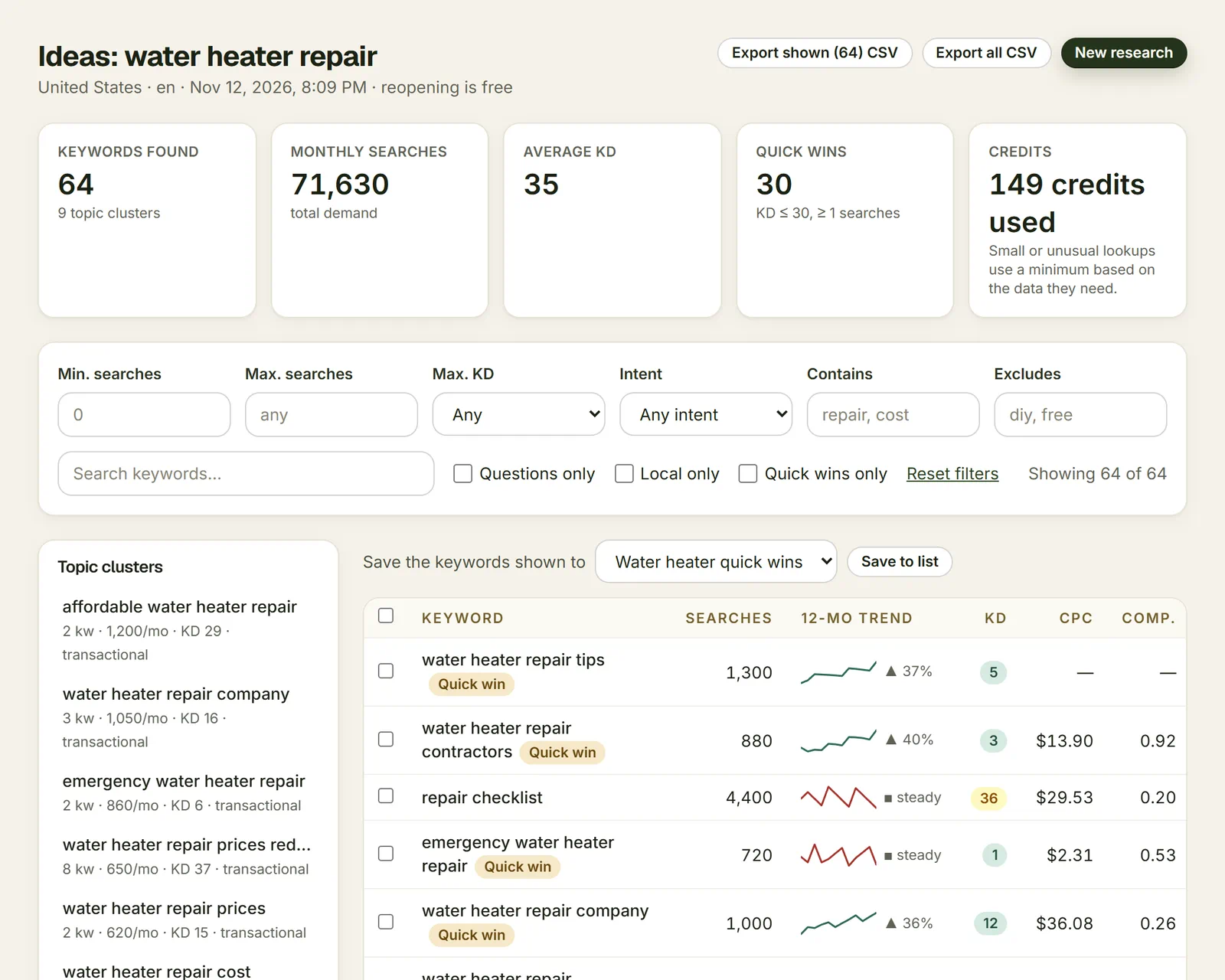
Keyword research from seed keywords, a competitor's domain, a keyword gap or a pasted list of up to 1,000 keywords.
- Volume, 12-month trend, difficulty, CPC and intent
- A 0 to 100 opportunity score with quick wins flagged
- Topic clusters, Ask AI, saved lists and CSV export
Plans from $19 a month; 7 days for $5
Chrome extension
Volume, difficulty, CPC, intent and a 12-month trend under the Google search box, plus related searches and People also ask.
- Right-click any text on a page to look it up
- Free to install from the Chrome Web Store
- Included with every plan; lookups use your credits
Included with every plan
$5 today, non-refundable, for 5,000 keyword credits over 7 days. Then the plan you picked (Starter is $19 a month) unless you cancel first. Add-ons are priced separately. Prices as listed at keywords.gatorcrawlseo.com, November 2026.
Have a keyword list and no plan?
Tell us what you sell and where. We will look at the searches you already appear for, compare them with the ones your competitors win, and send back the first pages we would build or fix. Free, and a person reads it.
Which of these sounds like you? (pick any)
Frequently asked questions
With the searches it already gets. Open Search Console and read the queries your site appears for, then list the words customers use on calls, in reviews and in emails. Group them by the service each one is about. Only then reach for a tool, to size the groups and find the phrases you missed.
Each one estimates from its own data, and none of them sees Google's full counts. Some round, some merge close variants and some drop rare phrases entirely. Treat volume as a way to rank keywords against each other, not as a forecast of visitors, and check the real results page before you commit to a phrase.
Sometimes. A single-location business with a short service list can do most of the work with Search Console and a free planner. A paid tool earns its fee when you need competitors' keywords, many locations or a large catalog sized at once. Buy one month, run the research, and cancel if you do not need it again.
One main search and the close variations that mean the same thing. If two phrases return different results on Google, they usually want different pages. A page aimed at everything tends to rank for nothing, which is why a good keyword map gives every group of searches exactly one owner page.
Yes. Our keyword research runs inside DataCram's monthly SEO programs, which start at $575 a month as of November 2026, depending on complexity, setup and budget, with no long contract. The result is a ranked list of pages to build or fix, each tied to a service you sell, not a spreadsheet of volumes.
Other topics
64 topics