The Seven Levels of TikTok Advertising (and Why Your Commercial Is Not One of Them)
There is a particular silence that falls over a marketing meeting when someone says the word TikTok.
The owner pictures teenagers dancing. The office manager pictures the owner dancing. Someone mentions that their nephew "does TikTok" and could probably help, and the nephew is never heard from again. Then a decision gets made, usually one of two: ignore TikTok entirely, or take the television commercial, upload it, put money behind it and watch nothing happen.
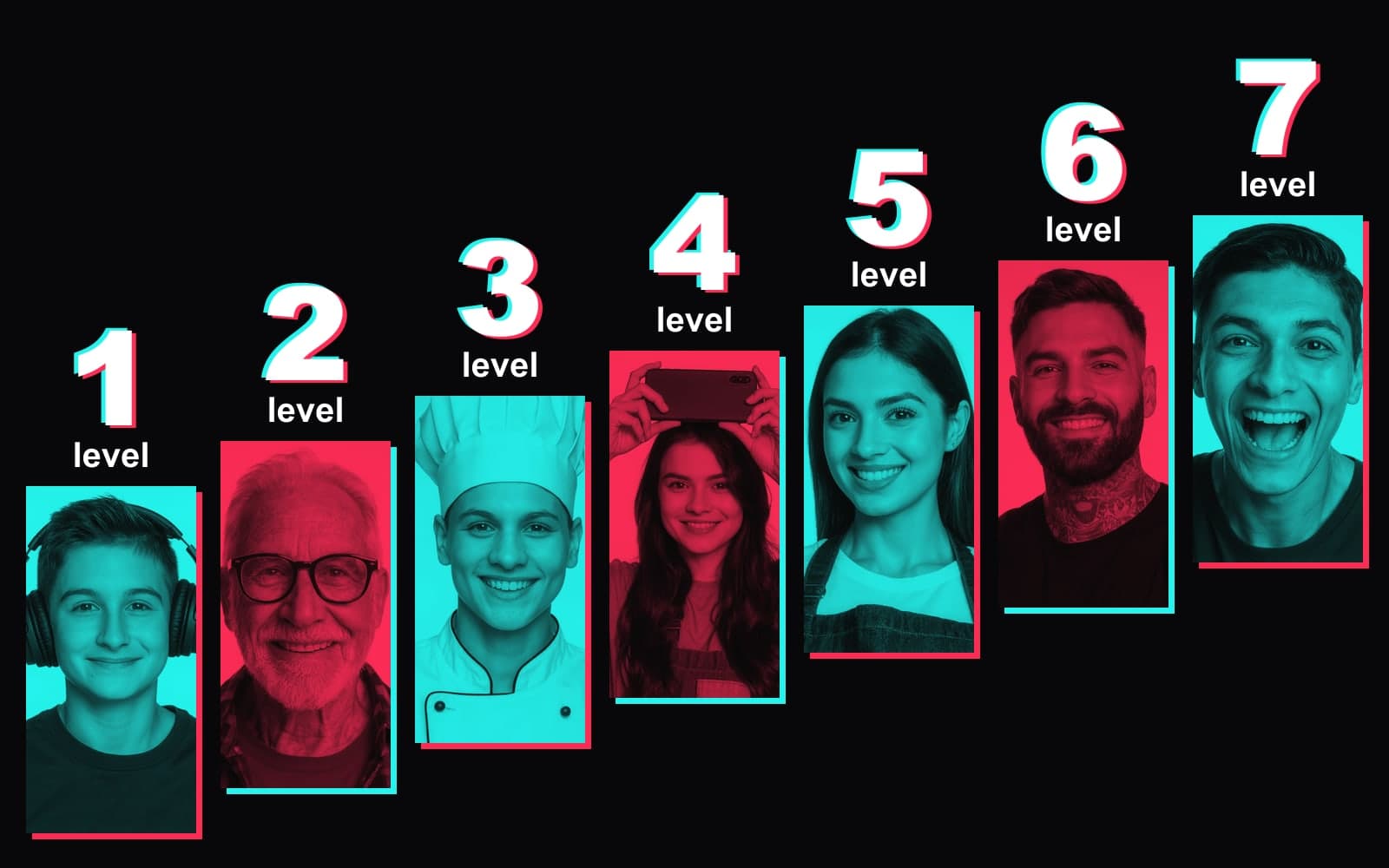
Both decisions are understandable. Both are expensive. TikTok advertising works for restaurants, salons, boutiques, gyms, contractors who do visually satisfying work, and anyone selling a product people can see in use. It does not work the way television works, or even the way YouTube works. It works in levels.
If you read our seven levels of YouTube advertising, the shape will feel familiar. The rules inside each level are different, and on TikTok they are less forgiving.
Level 1: Uploading the commercial
The commercial is horizontal. It opens with the logo animating in over a swell of music. At second four, a spokesperson in a polo shirt appears in front of the building. The phone number arrives at the end, where no one will ever see it.
On TikTok this is not an ad. It is a speed bump. TikTok's own guidance for advertisers says to use 9:16 vertical video, to skip long intros and logo animations, and to hook viewers in the first three seconds. A horizontal ad on a vertical app announces itself as an ad before it says a word, and the thumb that scrolls past it does not hesitate.
Level one fails for the same reason a tuxedo fails at a pool party. Nothing is wrong with the tuxedo.
Level 2: The three-second ad
The first real step is respecting the three seconds. Show the thing in use immediately: the before and after of the pressure-washed driveway, the steak hitting the grill, the haircut being revealed. TikTok's guide puts it more bluntly for product ads: show the product in use within the first two seconds.
Three more rules from TikTok's own creative guidance are worth taping to the wall:
- Sound is on. TikTok calls itself built for sound. Use a voice explaining the benefit, not just a song.
- Keep text in the safe zones. The buttons on the right and the caption at the bottom cover the edges of the screen. Text placed there is text no one reads.
- Aim for 21 to 34 seconds. That is TikTok's recommended length for most in-feed ads, though the format allows longer.
A phone, good light and a person who knows the work will usually beat a production crew. TikTok viewers are trained to trust things that look like posts.
Level 3: Boosting posts that already worked
Here is the shortcut most businesses never take. Instead of making ads, make posts. Then pay to show the ones that worked to more people.
TikTok calls this Spark Ads: a native ad format that runs an organic post as the ad. The likes, comments, shares and follows the ad earns stay on the original post, so the money you spend keeps working after the campaign ends. A regular ad, by contrast, lives and dies as an ad.
The practical effect is that your organic posts become a free testing lab. Post five videos. The one that earns attention on its own is the one you put money behind. You are no longer guessing which ad will work; your audience already told you.
Level 4: Borrowing someone else's face
Level four adds creators. A local food reviewer, a fitness instructor, a home improvement account with a following in your city: their videos about your business can run as Spark Ads too, once they generate an authorization code in the app and send it to you.
Two cautions. First, pay attention to fit, not follower count. A creator with four thousand followers who all live within twenty miles of your shop is worth more than a creator with four hundred thousand who live everywhere else. Second, the Federal Trade Commission's Endorsement Guides require that paid relationships be disclosed. If you paid the creator, gave them free service or anything else of value, the video needs to say so. TikTok's own branded content policy requires creators to switch on its "Disclose commercial content" setting, which labels the post as a paid partnership. Make that part of the deal. We are not a law firm, and your attorney is the right person for the fine print, but "nobody will notice" is not a compliance strategy.
Level 5: Knowing which video sold something
Most businesses on TikTok measure views, which is like measuring a store's success by how many people walked past the window.
TikTok has two ways to see what happened after the tap. The Pixel is a piece of code on your website. The Events API sends the same information from your server, which catches conversions the browser misses. TikTok recommends running both together, with deduplication so a sale is not counted twice, and reports from its own internal analysis that advertisers using both captured 19% more events and saw a 15% improvement in cost per action. That is TikTok grading its own homework, but the logic holds: a system that cannot see your sales cannot find you more of them.
Then send the click somewhere built for it. A landing page made for the ad, fast on a phone, with one offer and a button within thumb reach, converts better than a home page built for everyone. And set up conversion tracking properly, because TikTok's automated bidding learns from the conversions you report, and a pixel that reports nothing teaches it nothing.
Level 6: Letting the machine drive, with a budget it can use
TikTok's automated campaign type is called Smart+. You supply your goal, your creative, your location and language, and the system handles targeting, optimization and creative rotation, shifting budget toward the ads that perform. It covers sales, lead generation, traffic and app installs.
Automation needs fuel. As of TikTok's July 2026 help page, a campaign budget must exceed $50 and a daily ad group budget must exceed $20. Those are floors, not recommendations. A campaign that spends the minimum spread across too many ad groups never gives the system enough results to learn from, and an unlearned campaign is an expensive random number generator.
The businesses at level six run fewer ad groups, more creative and enough budget to let one campaign learn, then let it run before touching it.
Level 7: Never running out of ads
The last level is the one that separates the businesses that try TikTok from the ones that keep using it. TikTok ads wear out. The same viewers see the same video, the novelty is gone, and results slide. The answer is not a better ad. It is a steady supply of new ones.
The most useful free research tool in the business is TikTok's Creative Center. Its Top Ads section shows high-performing ads that advertisers have allowed to be featured, filterable by region, industry and campaign objective, each with a second-by-second graph of where viewers engaged. Study the first three seconds of the top ads in your industry, not to copy them but to learn what the audience stops for.
Then build a habit: a few new videos every week, filmed in the course of normal work, posted organically, with the winners promoted. It is less a campaign than a kitchen. Something is always cooking.
Is TikTok right for your business?
Honestly, not always. If your customers call you in an emergency, such as a burst pipe or a dead air conditioner in July, they are searching, not scrolling, and search ads will usually earn your first dollars faster. TikTok shines when your work is visual, your product is easy to demonstrate, or your customer is likely to buy because something looked good, tasted good or seemed fun.
If you want help deciding where TikTok fits in your budget, or whether it fits at all, that is what our online marketing strategy work is for. And if the honest answer is that your money belongs on search first, we will tell you that too, and our free ads audit is a good place to start.