The Most Expensive Rebrand in Email Is Two Letters Long
Somewhere in an office with good lighting and better coffee, a clever person had an idea.
The newsletter, they said, should sound like a friend. Not a brand — a friend. And friends do not write to you from newsletter@. Friends write from something warmer. Something with its shoes off. Something like yo@.
The room loved it. Somebody put it on a whiteboard, and in my experience nothing has ever been removed from a whiteboard once it has gone up there. It tested beautifully with the eleven people present, which is the only focus group that has never once been wrong about anything.
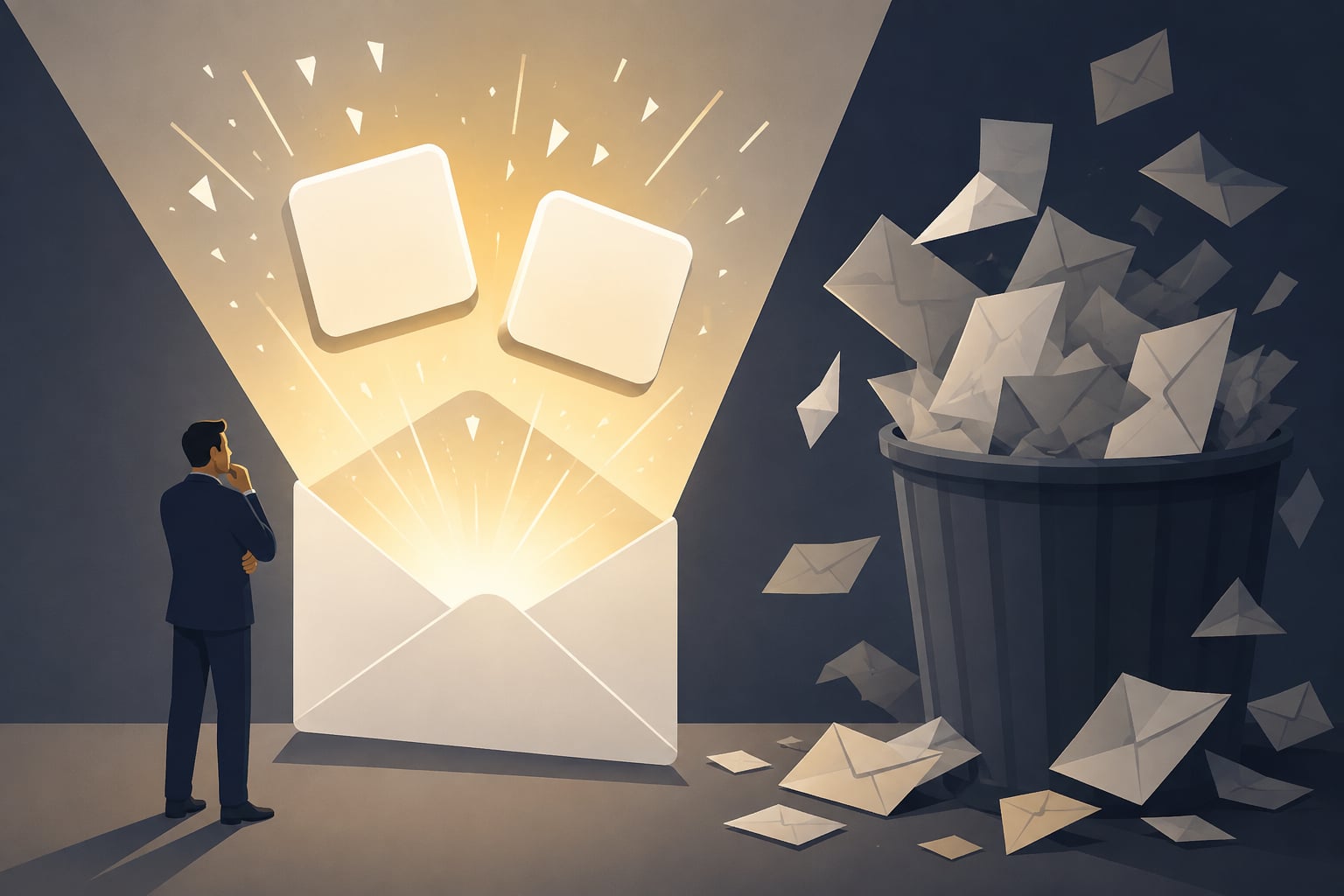
The next issue went out. A good number of copies did not go to inboxes. They went to junk, where they sat in the dark beside a Nigerian prince, two crypto opportunities, and a gentleman with an unusual offer regarding my car's extended warranty.
I know this because I am a customer. The company sells the sort of things I actually buy, and their newsletter is one of maybe four I open on purpose. That is precisely why I noticed. You do not miss the mail you ignore.
The machine did not read the memo
Here is the part the whiteboard left out.
You do not own your place in the inbox. You rent it. And the deposit — the thing you put down over years and never see on any invoice — is your sending history.
That history does not belong to your brand. It belongs to the address. newsletter@ had been showing up for years: opened, clicked, occasionally replied to, dragged out of spam by a few hundred people who wanted it, and saved into a great many contact lists. Every one of those small human gestures was a coin dropped into a jar with that address written on the side.
Then the mail arrived from a new address, and the machine did what any sensible doorman does with a stranger. It checked the list. The stranger was not on it. The stranger was sending in volume, on day one, with no history at all — which, I regret to report, is also precisely what a spammer looks like on day one. And the stranger's name was yo@, a local-part that filters have spent two decades learning to associate with people who are very excited about your car's extended warranty.
None of this was a judgment on the brand. The filter has never heard of the brand. It has heard of the address, and the address was born yesterday.
The meeting where nobody owned it
I want to be fair, because this is not stupidity. It is structure.
Somebody owned the voice. Somebody owned the calendar. Somebody owned the design, and somebody owned the offer, and all four of them did their jobs well. The from-address belonged to no one. It was infrastructure wearing a costume, and it got treated as a costume, because the person in that room who could have said "hang on, that resets our sender reputation" was not in that room. They are almost never in that room. They are usually the one who gets the ticket afterward, marked urgent, asking why the numbers fell off a shelf.
That is the whole comedy of the thing. The decision cost real money, took four seconds, and was made by a committee that would have spent a month arguing about a logo.
You have seen this movie before, in another channel
If this feels familiar, it should. It is the same mistake as a website redesign that renames every URL and forgets the redirects.
Same shape exactly. Years of accumulated, invisible equity — rankings, links, trust, history — traded for a cosmetic improvement nobody outside the building asked for. Nothing looks broken. The site is prettier. And the traffic quietly walks out the back door while everyone admires the new typography.
The lesson generalizes, which is why it is worth your time: the things that carry your equity are usually the boring, unglamorous strings. A URL. A from-address. A phone number on a listing. They look like details. They are load-bearing walls, and remodeling shows have taught an entire generation that load-bearing walls can be removed if you are enthusiastic enough.
If your traffic dropped after a redesign, the cause is usually missing redirects and 404s, and the fix is visibility recovery. Same disease, different channel.
Why nobody catches it for three months
Now the genuinely sinister part, and the reason this runs so long before anyone notices.
Your dashboard will not tell you. Open rate is calculated against the mail that was delivered, and mail in the junk folder is, technically speaking, delivered. It arrived. It is in the building. It is simply in the basement, in the dark, where no one goes. So the report comes back looking survivable — a little softer, sure, but it is summer, people are on vacation, the market is weird.
Meanwhile the actual number, the one nobody is measuring, is inbox placement: what share of your list can see the thing at all. That figure can fall through the floor while your open rate shrugs, because both are quietly measuring the shrinking pool of people who still get your mail in front of their eyes.
You find out three months later, when revenue from email is down and somebody finally asks a subscriber to check their junk folder. And there it all is. Every issue. Stacked up like unopened letters in a house nobody lives in.
If you must change your sender identity
Sometimes you have a real reason. Fine. Do it the way you would move a load-bearing wall — with a plan, and with something holding up the roof.
- Warm the new address up. Start small, send to your most engaged subscribers first, and build volume over weeks. Reputation is earned in installments.
- Run both in parallel. Do not flip a switch. Overlap the old and new senders so the history transfers through engagement rather than evaporating.
- Keep authentication aligned. SPF, DKIM, and DMARC properly set on the sending domain, so the mail is provably yours. This is the cheapest deliverability work there is and the most often skipped.
- Ask for the allowlist. Tell subscribers, in the last few sends from the old address, to add the new one to their contacts. Human vouching still counts.
- Measure placement, not just opens. Seed-test into real Gmail, Outlook, and Yahoo accounts so you can see the folder, not the fiction.
- Pick a name a filter has met before.
newsletter@,hello@,team@. Save the personality for the subject line, where it belongs and where it cannot cost you the delivery.
And the simplest rule, free of charge: if the reason for the change is that the old address felt a bit corporate, that is not a reason. That is a whiteboard talking.
How DataCram helps
We do the unglamorous plumbing that decides whether your marketing arrives at all. Email marketing set up with authentication that survives a filter, sender identity that keeps its history, and placement measured in the folder rather than in a dashboard. We also fix the same failure on the web side — broken forms and mail that never lands, 404s and lost redirects, and search visibility that fell off after a redesign. We are a San Antonio shop working with businesses here and clients across the country, and we tie the work to messages delivered and leads booked.
FAQ
Why did my newsletter suddenly start going to spam?
The most common causes are a change in sending address or platform, a sudden jump in volume, or authentication that is missing or misaligned. Mailbox providers build reputation per sender, so a new from-address starts with no history — and no history looks, to a filter, a great deal like a new spammer.
Does changing my "from" email address really hurt deliverability?
Yes, more than most marketers expect. Sender reputation, engagement history, and every subscriber who saved you to their contacts are attached to the specific address, not to your brand or your logo. Change the address and you begin again at zero while sending at full volume, which is the exact profile filters are trained to distrust.
How long does it take to warm up a new sending address?
Usually two to six weeks, depending on list size and engagement. Start with your most active subscribers, increase volume gradually, and watch placement rather than opens. Sending your entire list from a brand-new address on day one is the single fastest way to earn a spam folder.
How do I know if my emails are landing in spam?
Open rates will not tell you, because junk-folder mail still counts as delivered. Use seed accounts on Gmail, Outlook, and Yahoo and look at which folder the message lands in, or use an inbox-placement tool. Asking a handful of real subscribers to check their junk folder works too, and costs nothing.
What are SPF, DKIM, and DMARC, in plain English?
They are three DNS records that prove your mail is really from you. SPF lists who is allowed to send on your behalf, DKIM signs each message so it cannot be forged in transit, and DMARC tells mailbox providers what to do when a message fails those checks. Without them, even legitimate mail gets treated as suspicious.
Next steps
The address on your newsletter is not branding. It is the deposit on a rental you have been paying into for years, and it does not transfer when you redecorate.
Check yours. Send this week's issue to a Gmail account you do not own and see which folder it lands in. If it is the wrong one, tell DataCram what you are seeing or grab a free audit, and we will find out what it is costing you — and get your mail back in front of the people who actually asked for it.