In short
- Squarespace makes the best-looking template sites in the business, and for a portfolio or a single restaurant that can be enough.
- The look is shared. A dozen templates dress thousands of businesses, and customers have learned to recognize them.
- The limits are speed on a phone, search depth, a store that stops at simple, and features that end where the template does.
- Design-led businesses outgrow it the day the brand needs to be specific instead of tasteful.
- When you leave, the words and photos come with you. The design was never yours.
Three restaurants, one font
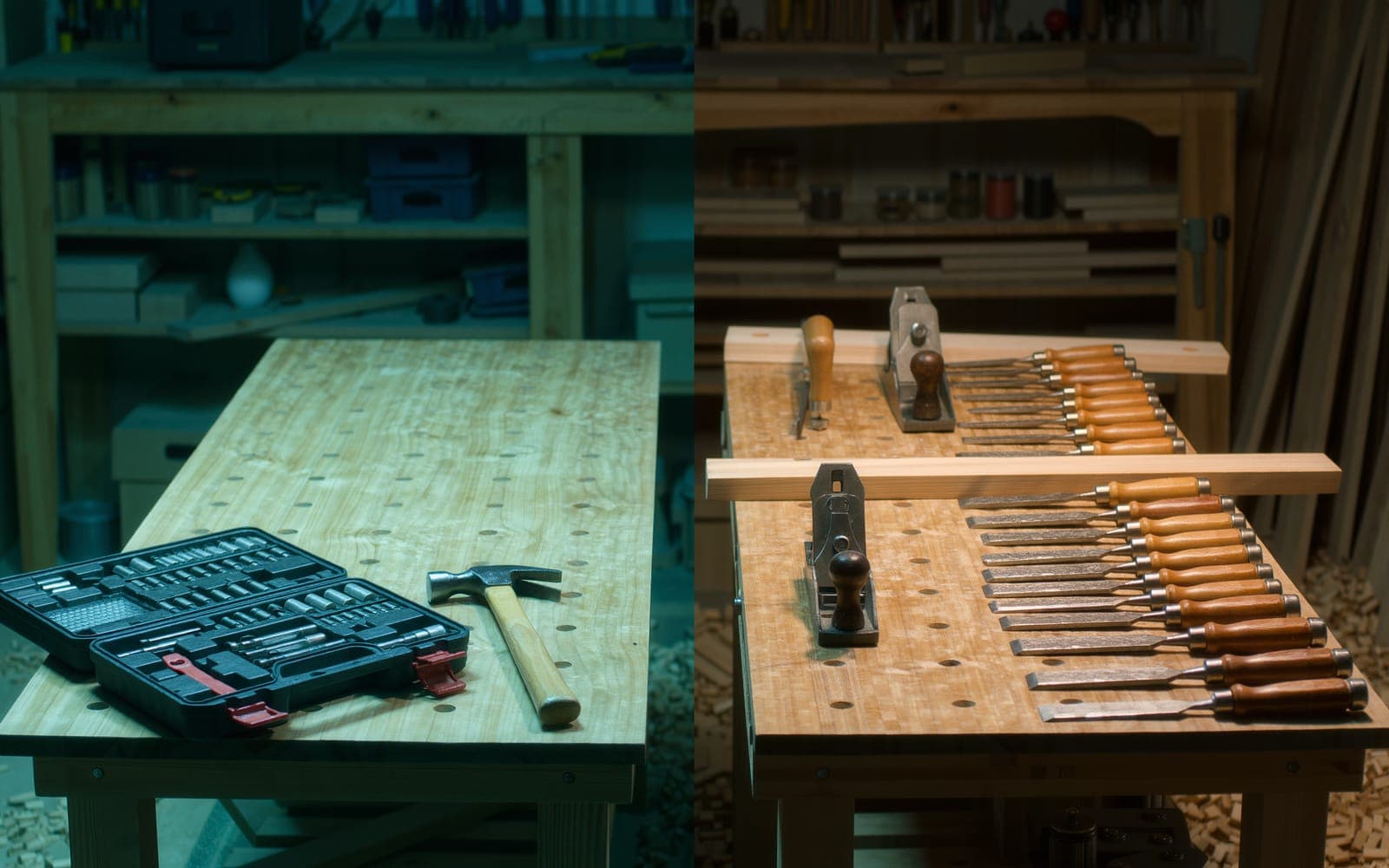
Walk down a restaurant row in any city and pull up the three best-reviewed places on your phone. There is a fair chance all three sites open on the same full-bleed photo, in the same thin serif, with the same centered menu link and the same reservation button in the same corner. They are all on Squarespace, on the same two templates, and they all look lovely.
That is the Squarespace deal in one image. It gives a business without a designer the appearance of having had one. For years that was enough, because customers did not know the templates. They know them now. The thin serif, the wide photo, the tasteful gray. It reads as "nice site" for a moment and as "the template" a moment after.
This guide is for the design-led owner: the restaurant, the studio, the photographer, the interior designer, the architect, the brand that lives or dies on how it presents. Squarespace was built for you, and it is worth being honest about where it serves you and where it quietly makes you look like everyone else. The Wix guide covers the other big builder; the honest math on building it yourself covers the decision in general.
What Squarespace gets right
Credit where it is due, and there is a fair amount.
- Design quality. The templates are the best in the builder market. Type, spacing and image handling are set by people with taste, and it shows. A rushed Squarespace site still looks composed.
- Photography. Large images, galleries and portfolios are handled well. For a photographer or an architect that is most of the job.
- The essentials in one bill. Hosting, SSL, a domain, email forwarding, a scheduling tool, a small store. One login, one subscription.
- Enough to open a restaurant site. Menus, hours, a reservation link, a photo of the room. That is a launchable restaurant site and it can be done in a weekend.
- It is hard to make ugly. For an owner without design judgment, guardrails are a feature, not a limit.
If your site's job is to show work, state hours and look good doing it, Squarespace is a defensible choice and a cheap one. The problems begin when the site has to do more than look good.
The limits that arrive later
Owners rarely leave Squarespace over the look. They leave over one of the limits that show up once the site is asked to do real work.
| When the site has to | On Squarespace | On a custom site |
|---|---|---|
| Load fast on a phone | Heavy pages, large images, platform scripts; often amber on Google's mobile test | Built to score green; the speed guide shows the gap |
| Rank for many services or towns | Basics are fine; deep structure, per-page schema and linked page groups are limited | Any structure a search engine can read; a page per service and per town |
| Sell more than a simple catalog | Solid for small catalogs; variants, custom checkout, wholesale pricing and subscriptions hit walls | Whatever the store needs, or Shopify behind a custom front |
| Do something the template does not | Code injection and a few embeds; no backend | Anything: calculators, portals, booking tied to your systems |
| Serve three locations | Three near-identical pages by hand | Location pages built from one source with real local content |
| Leave | Text and images export; the design and the site stay | Take the code anywhere |
The right choice, by what you sell
Photographers, artists, makers. Stay, at least at first. The templates were built for your work, the audience arrives by referral and social, and the site's job is to show the pictures. Move when you need to rank for "wedding photographer" in three cities and are not.
Restaurants and bars. Stay for one location with a menu, hours and a reservation link. Consider a custom restaurant site when there is a second location, when online ordering has to be yours rather than a delivery app's cut, or when the site is the reason people book a $150 dinner and it has to feel like the room.
Interior designers, architects, high-end trades. This is the group the template problem hurts most. Your client is buying your judgment. A site that shows your judgment, rather than Squarespace's, is a business decision, not a vanity one.
Service businesses that need to be found. If you are a dentist, a lawyer, a med spa or a contractor who chose Squarespace for the look, the look is not your problem. Ranking is. You need a page for each service and each town, fast on a phone, and the platform will fight you at each step. The home services guides show what that structure looks like.
Anyone who has hit the feature wall. Once you are paying for a third embed to do what the site cannot, the subscription is no longer cheap. It is a down payment on a site you will build anyway.
If you outgrow it
Leaving Squarespace is easier than leaving Wix and harder than owners expect. The text and images export; the design does not, because it was never yours. What you carry to the next site is the words, the photos, the domain if it is in your name, and a year or two of knowing what your customers look at.
That is a good starting kit for a custom site. A developer takes the photography you already love and builds the layout around it instead of around a template's slots, makes it load in a second on a phone, wires the search structure, and sets up redirects from every old address so the rankings come along. The migration service does exactly this, and a custom build in the $6,000–$20,000 range can be financed at 0% over one to three years.
If you want to see the difference before deciding, the free mockup is a developer's design of your home page built around your work, not a template. Put it beside the Squarespace version. For a design-led business that comparison is usually the whole argument, and the trust guide explains what a customer reads in the difference.
See your business done properly before you spend a dollar.
We will design a new home page for your business and show it to you at no cost. Custom, built the way a real development shop builds. Keep it either way.
Want an honest answer on building it yourself?
Tell us where you are and we will tell you, plainly, whether a builder will do the job or whether it is time for a real one. No pitch, and you keep the answer.
Which of these sounds like you? (pick any)
Questions people ask
Straight answers
For a portfolio, a single restaurant or a small studio whose customers arrive by referral, yes; the templates are well designed and the essentials are included. For a business that has to rank for many searches, load fast on a phone, or present a brand distinct from thousands of other Squarespace sites, it is limiting, and the limits tend to show up within a year or two.
Because a small set of templates dresses a very large number of businesses, and the templates share a house style: full-width photos, thin serifs, centered text, generous white space. The style is good, which is why it is popular, and its popularity is why customers now recognize it. A design-led business selling its own taste is the one this hurts.
Squarespace is fine for one location with a menu, hours, photos and a reservation link. A custom site earns its cost when there are multiple locations, when online ordering should belong to the restaurant rather than a delivery app, when the site has to rank for searches beyond the restaurant's name, or when the brand is the reason people book.
For a small catalog, yes: products, variants, shipping, taxes and payment all work, though lower plans add a transaction fee. It runs out of road with large catalogs, complex variants, wholesale pricing, subscriptions and custom checkout flows. Stores past that point usually move to Shopify or a custom storefront.
Yes. Text and images export, the domain transfers if it is in your name, and a developer rebuilds the pages with a layout designed for your business rather than a template's slots. Every old address is redirected to its new one so search rankings carry over. The design itself does not move, which is usually the point of leaving.
Squarespace runs a few hundred dollars a year plus any embeds. A custom small business site is typically $6,000 to $20,000 once, with hosting after that often under $50 a month. Over five years the gap narrows, and the custom site is faster, structured for search and owned outright. The website cost guide has the full accounting.
Where to go from here