Nine Industries, Nine Different Websites — and Why the Template Fits None of Them
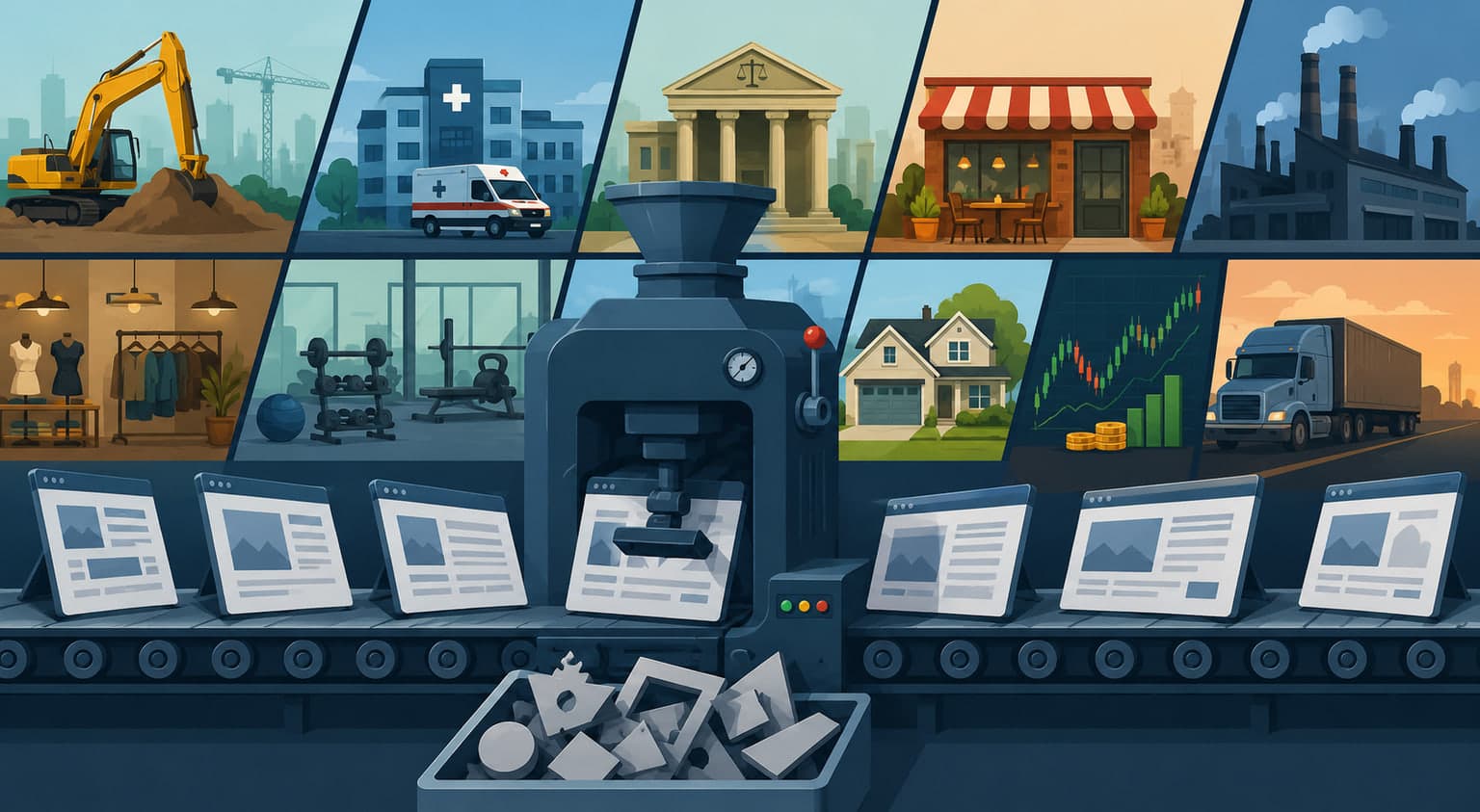
A template salesman will tell you a website is a website. Five pages, a contact form, a stock photo of people shaking hands in a conference room nobody has ever worked in. Pick a color. Sign here.
Then the plumber and the dentist and the personal injury attorney all get the same site with different logos, and all three wonder why the phone is quiet.
Here is the thing the template cannot say out loud: a website is not a brochure. It is a machine with a job. And the job is different in every trade.
Home services: the site is a dispatcher
When a water heater lets go at 6 a.m., nobody is browsing. They are triaging. They want to know you cover their zip code, that you can come today, and roughly what it will cost before they pick up the phone.
A home services site earns its keep with an instant estimate, a real booking flow tied to real availability, and emergency routing that behaves differently at 2 a.m. than at 2 p.m. A template gives you a contact form that lands in a spam folder and a promise to respond within one business day. The job went to whoever answered first.
Construction: the site is a portfolio and a filter
Construction has the opposite problem. You do not want every lead. You want the right ones, and you want the tire-kickers to disqualify themselves before they eat an afternoon.
That means project galleries that survive being looked at closely, scope and budget qualification built into the intake, and timelines stated plainly. The template's single contact form cannot filter anything. It just forwards everyone to you with equal enthusiasm.
Dental and med spa: the site is the front desk
Dental and med spa practices live and die on booked chairs. The site has to handle new-patient intake, insurance questions, before-and-after galleries that load fast on a phone, and financing questions asked by people who are embarrassed to ask them out loud.
Every one of those is a form, a gallery, or a calculator wired to something real. On a builder, each becomes a third-party embed with its own monthly fee and its own way of breaking.
Legal: the site is a trust argument
Nobody hires a law firm because the website was pretty. They hire because it felt like the firm knew what it was doing.
That means case results presented without overpromising, intake that captures the facts an attorney actually needs, and a response path that does not leave a frightened person waiting. The template's stock imagery works against you here. It signals that you bought the same site as everyone else, which is a strange opening argument.
Restaurants and hospitality: the site is a menu and a clock
A restaurant site answers three questions: are you open, what do you have, and can I get a table. Everything else is decoration.
Get those wrong and the customer is at the competitor's site in nine seconds. Get them right on a phone, at dinnertime, on a weak signal, and you win. That is a performance problem, and performance is exactly what a page builder is worst at.
Automotive and real estate: the site is an inventory
Automotive and real estate sites are databases wearing a nice coat. Listings change daily. Photos are heavy. Search and filtering have to be fast or nobody uses them.
This is where builders hit the wall hardest. Their content systems are capped by plan tier, and inventory does not care about your plan tier.
Fitness and beauty: the site is a schedule
Fitness studios and salons sell time slots. The site's whole job is to fill them without a phone call — class schedules, membership tiers, stylist availability, deposits.
Booking is not a plugin. It is the product.
Retail: the site is the store
Online retail is the one everybody thinks is solved. Then the checkout breaks on a Saturday, or the order confirmation emails quietly stop sending, and a week of orders sits unfulfilled while the owner wonders why sales dropped.
Those are not hypotheticals. They are two of the most common failures we document in our Repair Hub — see WooCommerce checkout not working and order emails not sending. Both are ordinary Tuesdays on a plugin stack.
Professional services: the site is a credential
Professional services and financial services firms sell judgment, which is invisible. The site has to make it visible: clear positioning, real people, specific outcomes, and content that demonstrates you know something the prospect does not.
That is a content problem, and here is the part the builder pitch leaves out. On a template platform, you write all of it. Every word, every page, every update. The software is cheap because your labor is free.
What the template actually costs
Nine industries. Nine different machines. One template that treats them all as a brochure with a contact form.
The pitch for a builder is that it is cheaper. It is cheaper on the first invoice. Then you buy the booking app, the form app, the gallery app, the review app, and a higher plan tier when your listings outgrow the last one. You write the copy. You do the search work. You spend the evenings. We laid the five-year math out in detail in our comparison of custom builds against page builders, and the numbers cross over sooner than most owners expect.
How DataCram helps
We start with the job, not the layout. What has to happen on this site for the phone to ring, the chair to fill, the truck to roll, the table to turn.
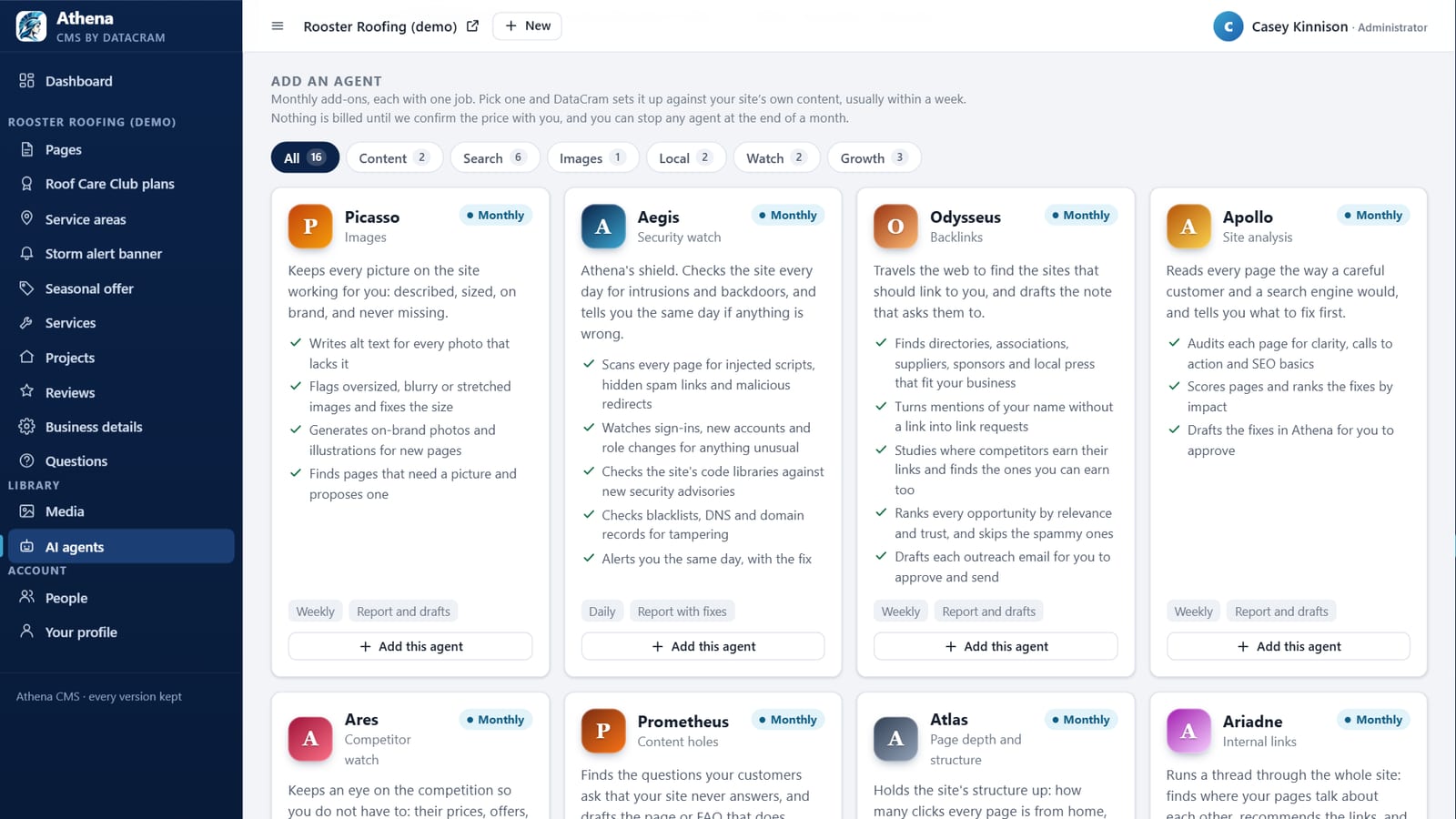
Then we build it — a custom site with the booking, estimating, inventory, or intake your trade actually runs on, a content system your team can use without a developer, and the marketing to put it in front of the right people. We work across more than forty industries, and we are a San Antonio shop serving businesses here and clients nationwide.
If your current site is already misbehaving, start with the symptom in the Repair Hub. If you are weighing a rebuild, the pricing is published.
FAQ
Is a custom site overkill for a small business?
Not if the site has a job. A five-page brochure that never changes is fine on a template. A site that books appointments, quotes work, or lists inventory is a tool, and tools should be built to fit. Ours start at $1,750.
We are in an industry you did not mention. Does that matter?
No. The list above is a sample of the forty-plus industries we work in. The method is the same: figure out what the site has to do, then build that.
We already have a template site. Is it a total loss?
Usually not. Sometimes the fix is a rebuild, sometimes it is repairing what is broken and adding what is missing. We will tell you which, and we will tell you if the answer is "leave it alone."
How long does a custom build take?
Most land between four and ten weeks depending on what has to be wired up. Booking, payments, and inventory add time. A straight marketing site does not.
Next steps
Your industry has a website that works and one that just exists. The difference is rarely design. It is whether anyone asked what the thing was supposed to do before they built it.
Tell DataCram what you do, or take the free audit, and we will tell you plainly what your site should be doing for your trade — and what it is doing instead.

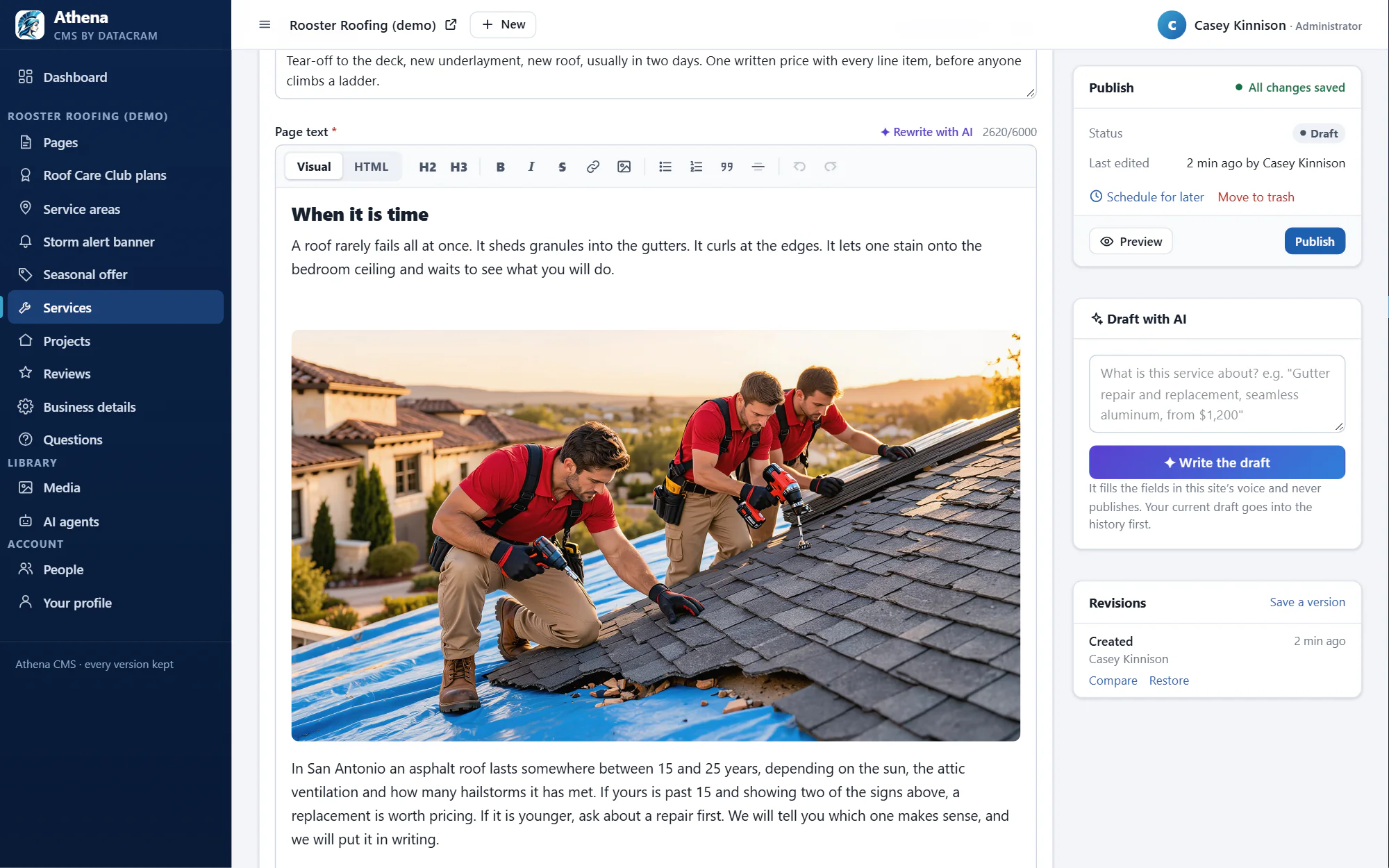
 What you edit with on Next.js