The Google Setting That Decides Whether Siri Recommends You
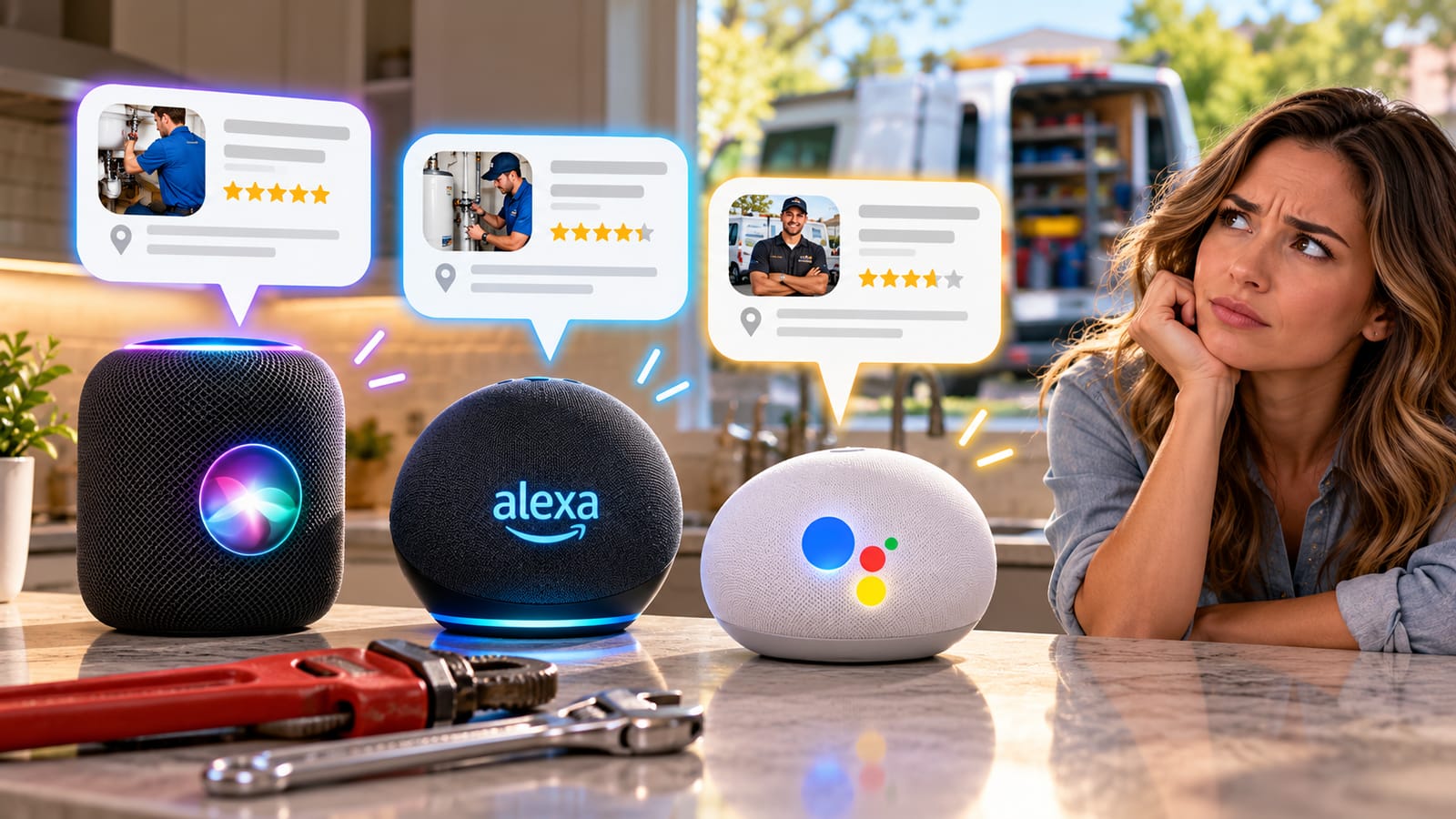
Try this. Take out the phone that's already listening to you and ask it out loud: "Hey Siri, who's the best [what you do] near me?" Then stand there and listen to a calm little robot voice recommend your competitor.
That's not a glitch. That's the machine doing precisely what it was built to do. You just weren't in the room when they built it — and nobody sent you the memo that the room existed.
Meet the file you've never seen
For twenty years the entire small-business internet ran on one piece of advice: "be on Google." So you got a website. Maybe you Googled yourself once, saw your name, felt a warm sense of completion, and moved on with your life.
Meanwhile, on three different devices, in a few million kitchens and trucks and driveways, a voice has been answering questions about your business all day — reading from a file you have never opened, full of facts you never approved, to customers you'll never know you lost.
They call it a "listing." Beautiful word. Sounds like something you did, an errand you ran. You didn't. A machine wrote it for you, guessed at the parts it didn't know, and started reciting it aloud to strangers. Your hours, your address, whether you're even open — a robot is doing dramatic readings of its best guess, and the guess is often wrong.
The punchline: Siri doesn't even use Google
Here's the part that should make anyone who paid for "Google optimization" laugh or cry, dealer's choice.
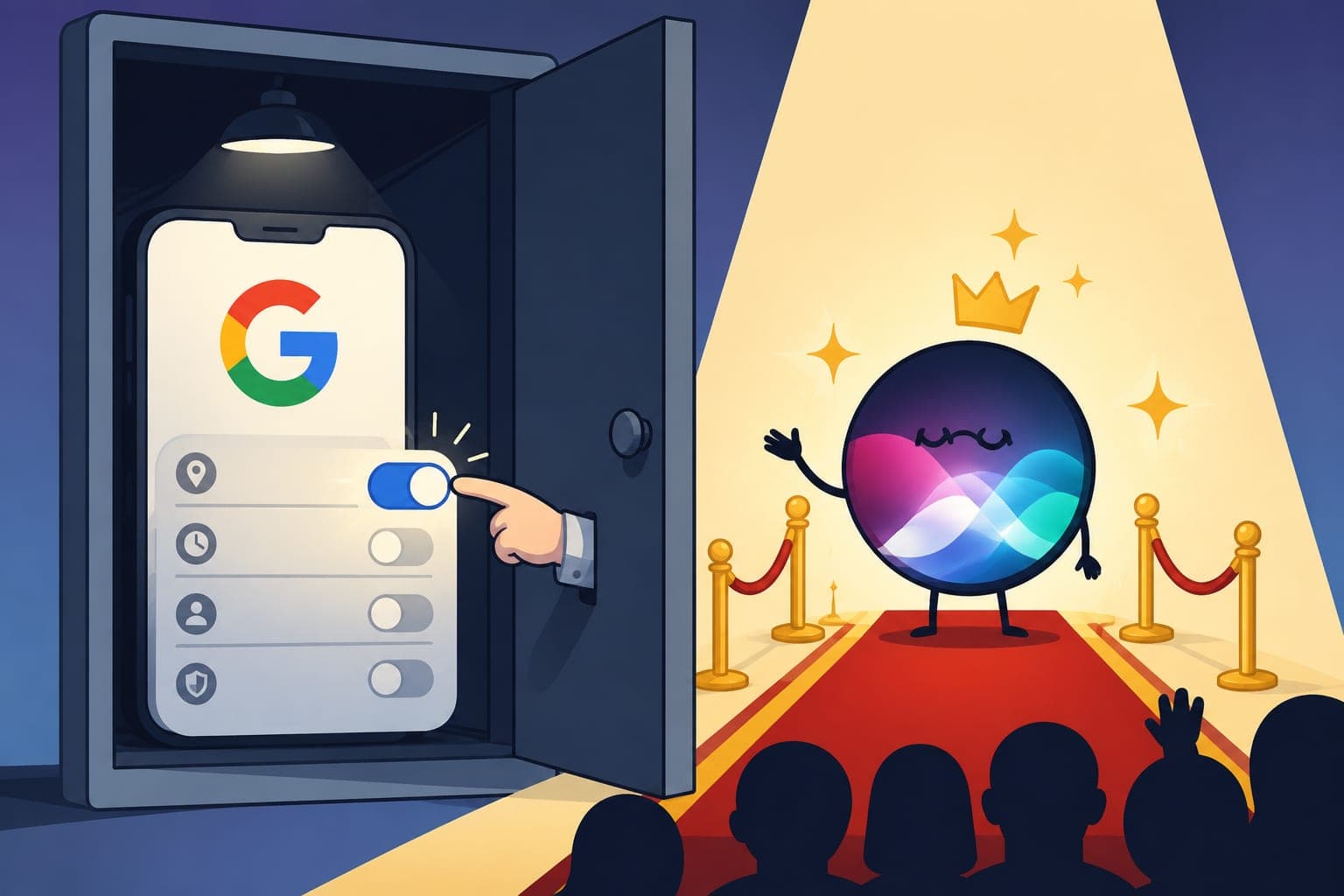
Siri doesn't read Google. When you ask an iPhone who to call, it pulls from Apple's own map and business data, plus Yelp. Google's assistant and its new AI answers read your Google Business Profile. Alexa leans on Bing and Yelp. So there is no one setting. There's a committee of them, scattered across platforms you have never logged into, and — this is the good part — they don't agree with each other.
When the machine finds three phone numbers and two sets of hours for your shop, it does what a nervous intern would do: it says nothing specific, or it names the business whose story is clean. New rule: if a robot is going to hand your name to a stranger at 9 p.m., it should at least get your closing time right. It won't. You never claimed the file, and a machine would rather recommend someone else than admit it isn't sure about you.
Fine — here's the setting
The headline promised a setting, so here it is, and it manages to be both the whole game and deeply stupid: claim your listings and make them say the same thing.
That's it. That's the secret the industry dresses up in nine syllables and a monthly retainer.
- Google Business Profile — claimed, the right category, hours that are actually current. This is the one feeding Google's assistant and its AI answers.
- Apple Business Connect — the ghost listing running Siri. It's free. It has been sitting there for years with a guess where your real information should be, and almost nobody in your town has claimed theirs. That isn't a problem. That's an open door.
- Bing and Yelp — the unglamorous plumbing under Alexa and half the map apps. Boring. Also read aloud to buyers every day.
And the single most-fumbled field on all of them: the category. Choose "restaurant" when you are a "seafood restaurant," and you have politely instructed the machine to leave you out of the exact question your customers ask. There was a dropdown. You picked the lazy option. Now you're invisible, and you're blaming the algorithm. The algorithm is fine. The algorithm read the form. You filled it out like a hostage.
Why the machine always picks the clean story
Strip away the mystique and a voice assistant behaves like a cautious stranger deciding who to trust. It checks whether your name, trade, and address line up everywhere it looks. It reads your rating out loud — the star number is now spoken to the customer before they ever see your face. Agreement reads as trust. Contradiction reads as risk. The machine routes around risk the way water routes around a rock: quietly, and without telling you.
That is what voice and ambient assistant optimization actually is, under the jargon — making every source a device can find agree on who you are, so the machine is comfortable saying your name first.
What the silence costs
Voice bends toward two words: "now" and "near me." Hands are full, the AC just died, a kid's tooth just cracked, and nobody is scrolling to page two of anything. The phone speaks one name. If it isn't yours, you didn't lose a close call — you lost a customer who never learned you existed. No missed-call log. No form. Just a truck in someone else's driveway.
That's the quiet tax on being unclaimed: not a bill you can see, but jobs that route around you all day, in a voice you never hear.
How DataCram helps
We do the unglamorous work the robots reward. We claim and align every profile a device reads — Google, Apple, Bing, and Yelp — down to the hour, add the structure that lets an assistant read your answer aloud without mangling it, and build the local presence and reviews that make a machine name you first. We're a San Antonio shop doing this for businesses here and clients across the country, and we tie it to the only score that counts: calls answered and jobs booked.
FAQ
Wait — Siri really doesn't use Google?
Mostly right, and that's the point. Siri reads Apple's business data and Yelp; Google's own assistant and AI answers read your Google Business Profile; Alexa leans on Bing and Yelp. It was never one platform. It's several, and they have to agree.
I claimed my Google profile years ago. Am I set?
"Claimed" and "complete and current" are different animals, and Google is one of four. Your Apple Business Connect listing — the one steering Siri — is very likely still sitting there unclaimed with a guess in it. Most are.
Is Apple Business Connect actually free?
Yes. It costs nothing but the half hour to claim it and get your facts straight, and hardly any of your competitors have bothered. Early and free is a rare pairing in marketing. Take it.
How fast does this change what the assistants say?
Fixing a wrong or missing listing tends to register in weeks. The trust that makes a machine pick you first — consistency plus real reviews — compounds over a few months and then holds. We track it so you can watch it move.
Next steps
Run the experiment again in a year. Either your phone says your name when a neighbor asks, or it says someone else's — and there is no third option where the robot politely explains that you were technically a great choice but your hours didn't match. Machines don't do nuance. They do the clean story. Tell DataCram what you do, or grab a free audit, and we'll make sure the clean story is yours.

 Local, on autopilot