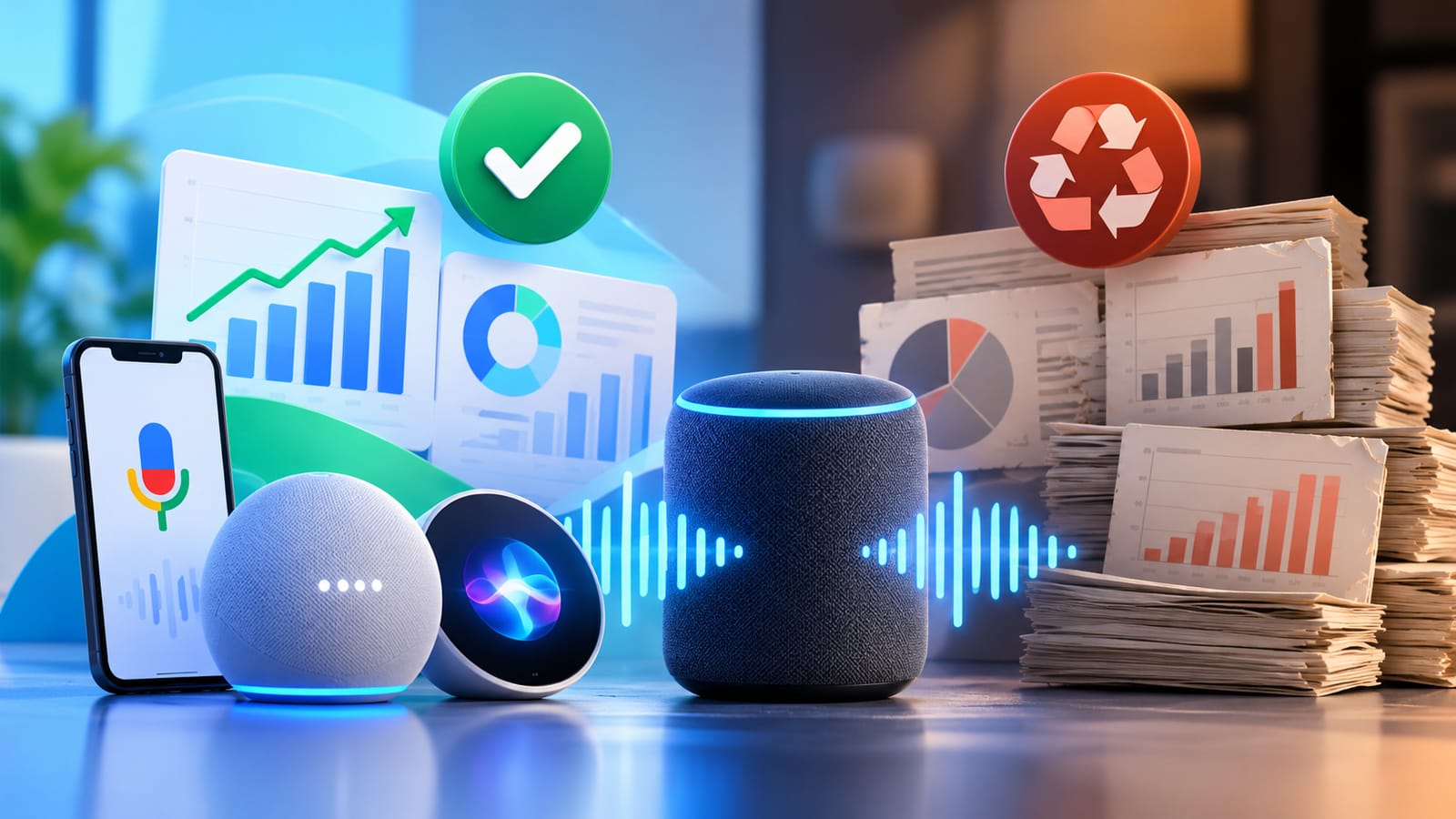
Geotargeting in an AI-First World: How Local Businesses Can Thrive If Google Search Changes

Speculation that "AI will kill Google search" ignores a more useful question: how will local discovery change when AI layers answers over indexed pages? The likely outcome is not death but evolution. For local businesses, that evolution demands tighter geotargeting, clearer entities, and systems that convert conversational queries into measurable outcomes.
Why this matters to buyers and local markets
Buyers now expect immediate, contextual answers. Voice assistants, AI chat layers, and answer engines prioritize concise, schema-friendly facts: business hours, services, prices, availability and location. If your online presence does not present those facts in machine-readable form, AI-driven search will route prospects to competitors or keep the interaction inside an assistant interface — and sometimes off your website entirely.
How AI will change local search — practical outcomes
AI changes the "click path." Answers generated by large models can synthesize listings, reviews and site content into a single response. For local businesses that means three practical outcomes:
- More direct intents end with an action (call, booking, directions) rather than a click-through to a site;
- Higher value placed on clean entity signals — consistent NAP (name, address, phone), Category tags, and authoritative citations;
- Opportunities to capture demand via structured data and conversational interfaces that plug into AI agents and automations.
What to do now — a prioritized checklist for geotargeting and AI readiness
Local businesses should treat this as a systems problem, not a one-off SEO task. Implementing the following reduces risk and creates measurable growth:
- Publish accurate LocalBusiness schema (schema.org) with geoCoordinates, openingHours, priceRange and acceptedPaymentMethods;
- Harden entity clarity: consistent NAP across your website, Google Business Profile, maps, directories and social profiles; add sameAs links to social/official pages;
- Create focused landing pages for neighborhoods, services and questions that match conversational search intents, with real customer questions answered in plain text on the page;
- Optimize Google Business Profile and Maps: regular updates, posts, service menus, structured offers and review responses;
- Instrument conversion points with event-level analytics and automations (calls, bookings, form fills) so AI-driven referrals become measurable leads;
- Use content marketing and local backlinks to build entity authority for your brand in the knowledge graph and search results.
Schema and entity clarity: the technical foundation
AI search engines rely on clear, consistent facts. LocalBusiness or Organization markup that matches what your pages visibly say helps Google understand your business details and can feed its knowledge panel. Google also says its AI features need no special schema, and it stopped showing FAQ rich results in May 2026, so FAQ markup is optional. The facts themselves, stated plainly on your site and repeated consistently across listings, do the heavy lifting.
Entity clarity also helps third-party integrations and local discovery on mapping platforms. Use canonical URLs, canonicalized addresses, and sameAs links to authoritative profiles. These practices increase the probability that an AI will attribute answers to your brand instead of an aggregator.
Where automation and AI agents fit in
Automation converts discovery into revenue. Automated appointment scheduling, AI chat agents tuned for local intents, and lead-routing workflows reduce friction for mobile and voice users. DataCram builds these systems—integrating web development, AI search optimization, AI agents and automations—to protect and expand local revenue streams.
Why sellers should invest now
Investment in geotargeted, schema-rich assets yields measurable outcomes: higher conversion rates from maps and voice, fewer lost leads to aggregators, and clearer unit economics for paid campaigns. For buyers of local services, these systems mean faster bookings and better match quality. For businesses, they mean predictable lead generation and defensible local visibility.
FAQ
Q: Will AI replace Google Search entirely?
A: No. AI will augment and reformat search results rather than replace the underlying indexing, ranking and ad ecosystem that powers discovery. Google and other platforms will incorporate AI features while continuing to surface links, maps and knowledge panels.
Q: If AI provides answers, why do I still need a website?
A: Websites remain the canonical source for in-depth information, transactions and brand signals. Structured data on your site feeds AI agents and knowledge panels; a fast, optimized site converts the users AI brings to your funnel.
Q: What measurable KPIs should I track?
A: Track calls and bookings, click-to-directions, conversions from local landing pages, impressions/queries in Google Business Profile, and assisted conversions from voice or AI-referral channels. Instrument these with analytics and automations so each lead is traceable to a source.
Geotargeting in an AI-first world is a systems problem that combines technical SEO, content, structured data and automation. When each piece is aligned, businesses win visibility, trust and revenue — even as answers migrate into assistant interfaces.

 SEO that keeps working