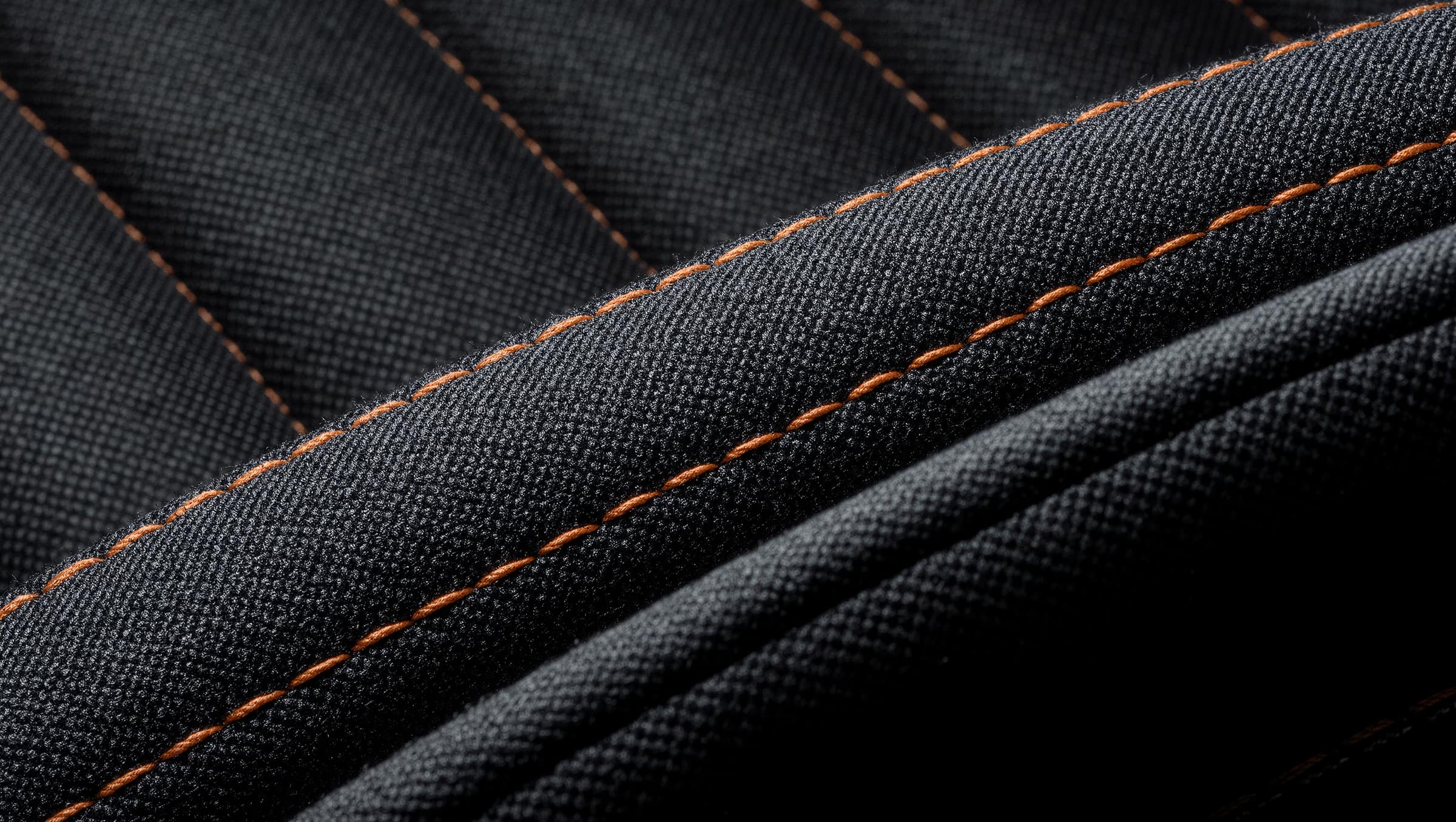
San Antonio, Texas · Weaving since 1987
Cloth that has to
survive the car.
Woven, knitted and coated surfaces for seats, headliners and door trim. Five constructions, three technologies, one building — and the full spec sheet on this page rather than behind an email address.
The library
The spec sheet is the sales pitch.
A buyer arrives wanting mass, abrasion, elongation and usable width. Most suppliers in this trade make them email someone for a PDF. Ours is on the page, comparable across the whole range, in a font where the numbers line up.
Structured jacquard
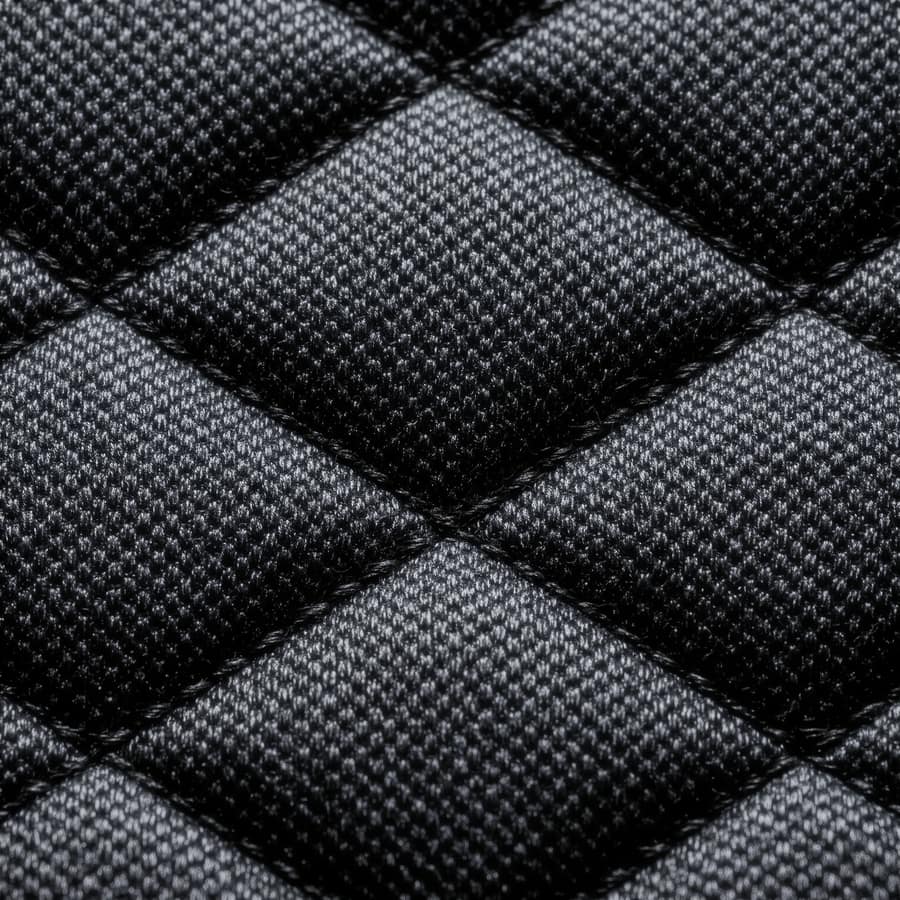
The workhorse seat facing. Dense enough to hide a seam allowance and stiff enough to survive lamination without going flat.
Specified for
- Seat facing
- Bolster
- Rear bench
- Construction
- Dobby-figured jacquard, 2/1 twill ground
- Composition
- 100% polyester
- Mass per unit area
- 340 g/m²
- Abrasion
- 60,000 cyclesCycles to end point, our own rig and our own end point.
- Elongation
- 18% warp / 24% weft
- Recycled content
- 0%See DC-306 for the recycled-stream equivalent.
- Width
- 1,420 mm usable
Every figure above is invented for this demonstration. There is no flammability row on this sheet, and its absence is deliberate — see the note at the foot of the page.
Applications
Which part is it for?
A catalogue means nothing until you can see where the cloth ends up and what that surface has to put up with. Pick a zone.
Schematic. Not a vehicle.
Seat facing
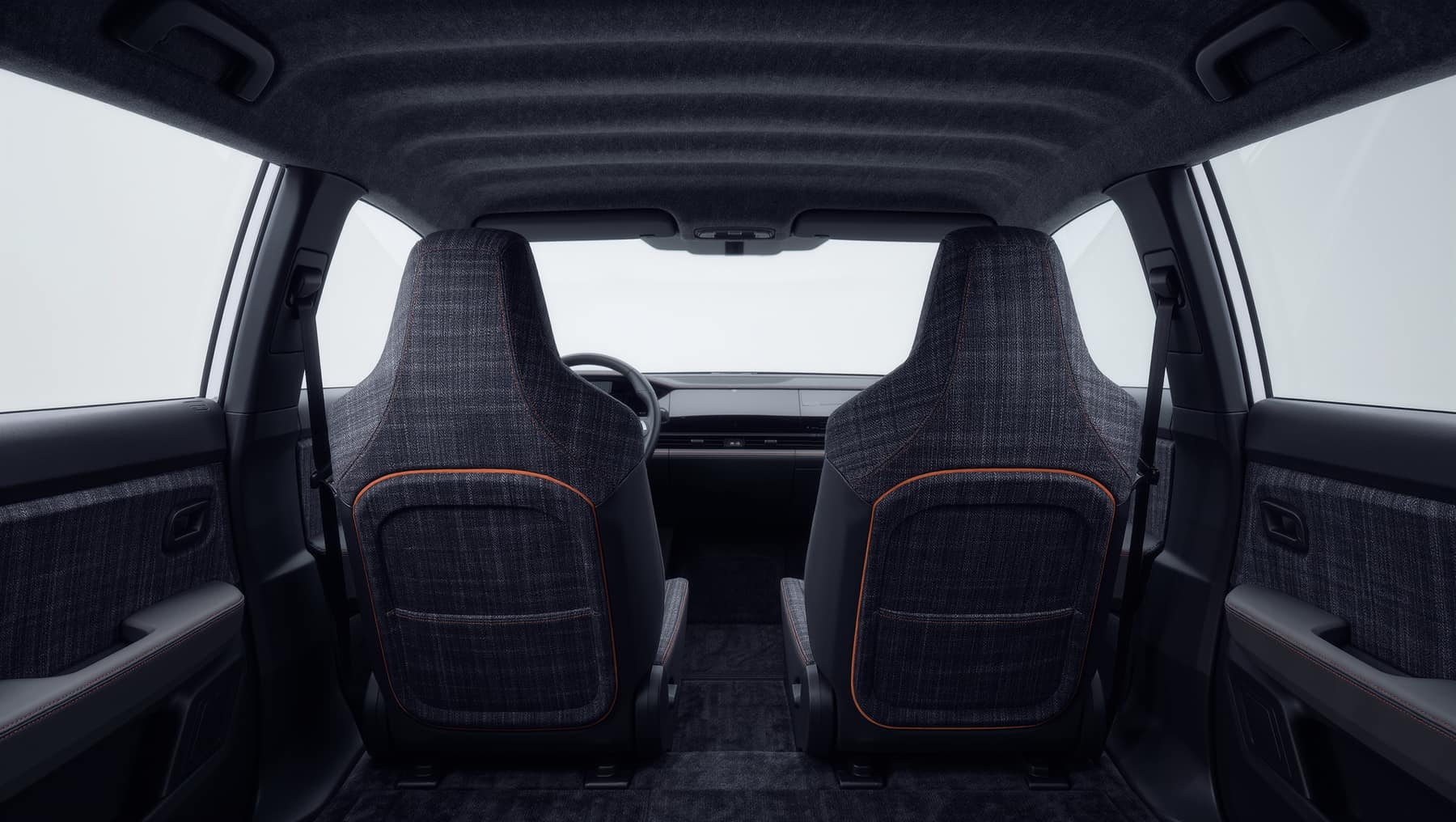
Cut, sewn and pulled over foam under tension. Takes every entry and exit for the life of the car.
What we run here
- DC-340Structured jacquard
- DC-212Spacer knit
- DC-306Melange weave
The line
Fiber to trim, in one building.
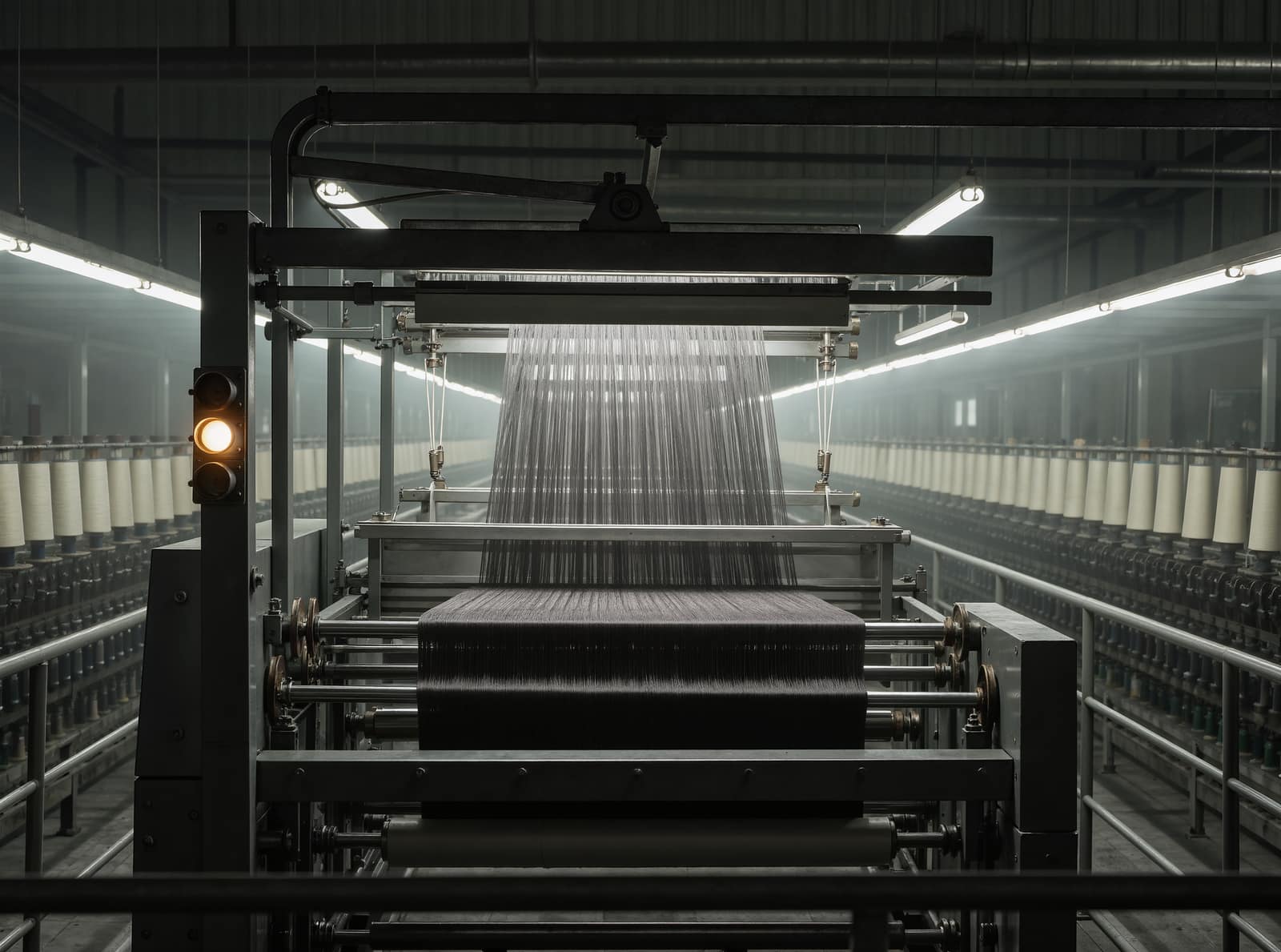
Five stations. The reason it matters is boring and real: when the hand of a cloth is wrong, we can walk twenty metres and find out why instead of opening a claim with somebody else’s mill.
- 01
Yarn
Spun or bought to a spec we set. Melange is blended at fiber stage, so the color is in the stock rather than on it.
- 02
Fabric
Woven, warp-knitted or needle-punched, depending on what the part has to do. Same building, three technologies.
- 03
Finish
Dyed, heat-set and coated. This is where hand, stiffness and dimensional stability are actually decided.
- 04
Lamination
Bonded to foam and scrim to the thickness the trim shop asked for, not to the thickness we felt like running.
- 05
Cut & sew
Nested, cut and sewn into covers. Contrast stitch is set here, and it is the first thing anyone notices.
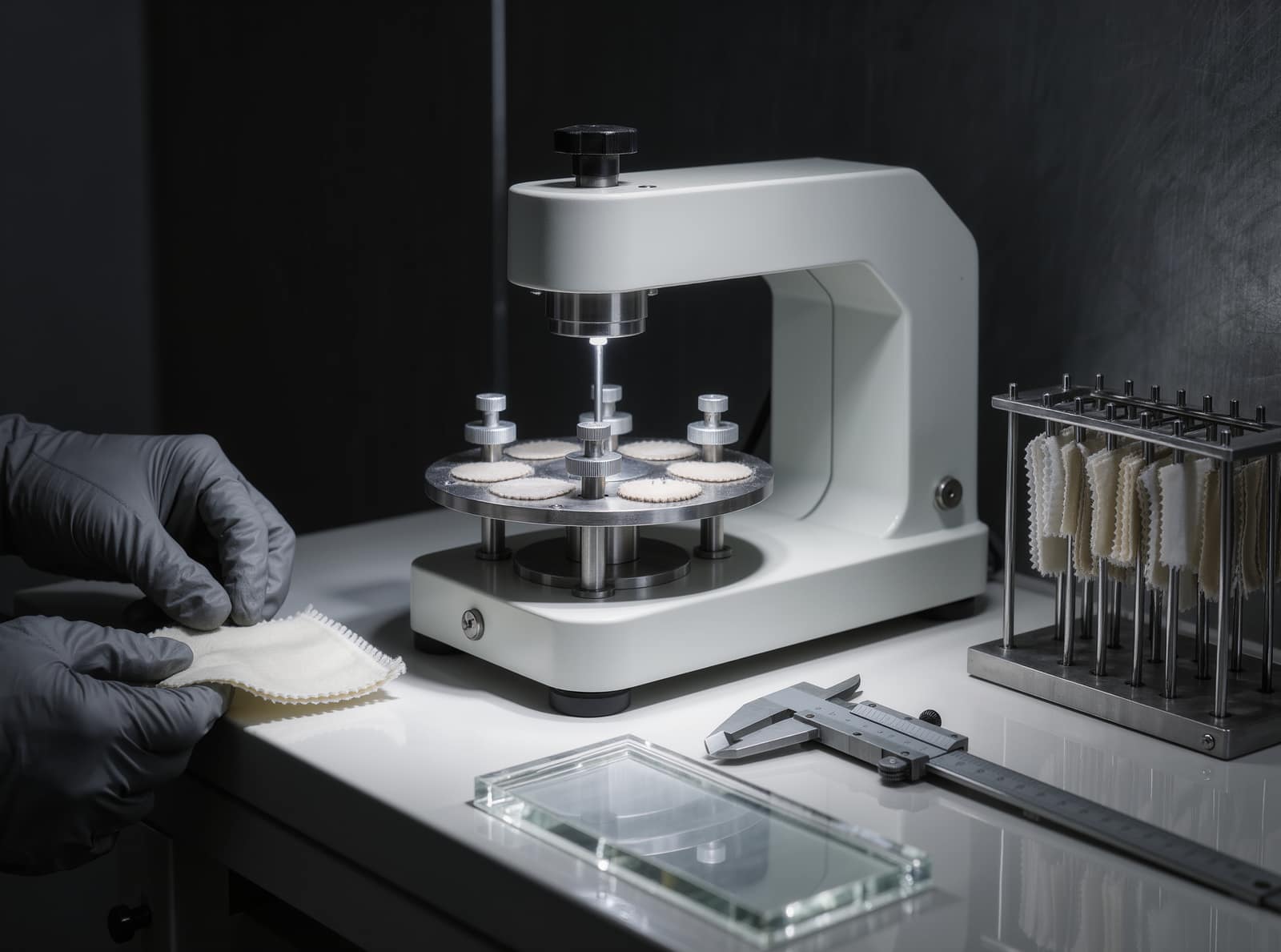
Measurement
Numbers, and where they came from.
Abrasion figures are worth exactly as much as the end point behind them, and end points vary by house. Ours are our own, run on our own rig, and we will tell you the method before you ask rather than after you have specified against it.
Where a figure is not third-party verified, the sheet says so on the line rather than in a footnote nobody reads.
In this demonstration none of it was run at all — there is no rig and no cloth. A real supplier’s site has to answer for every figure it publishes, which is precisely why this one publishes the method alongside the number.
Working with us
Four things you can ask for, with the lead time attached.
Every one of these is a question an engineer has to ask a supplier eventually. Publishing the answer, and the wait, is cheaper for both of us than a discovery call.
Swatch box
Every material in the library, on card, with the spec printed on the back. Posted the day you ask.
Yardage for trial
Enough off a production run to build a real seat and sit in it, rather than judging cloth off an A5 card.
Development sample
A construction built to your spec, including colorway matching against your master.
Quote
Priced against your volumes and your part geometry, with the yield assumption written down where you can argue with it.
Start with the box.
Five materials on card, spec printed on the back, posted the day you ask. You will know inside thirty seconds of handling them whether this is a conversation worth having.
Demo controls — inert. The number is a reserved fictional exchange and reaches nobody. Want a site like this? Talk to DataCram.